When sourcing a flexographic press, many overseas buyers face a common dilemma: manufacturers often promote their own standard inline flexo printing machine without providing a clear side-by-side comparison. Throughout my years assisting global buyers with machine selection at YG Machinery, I have seen clients purchase high-end units only to find out the machine frame did not suit their specific paper or film substrates, leading to color misregistration and excessive material waste.
There is no “one-size-fits-all” press—only the right press for your exact operating conditions. This guide evaluates the three primary press architectures: inline, stack type flexo printing machine, and ci flexo printing machine, breaking down registration accuracy, substrate limits, real-world costs, and plant layout needs to help you make a profitable investment decision.
24-hour sales hotline: +8613837112713
Structural Breakdown: Precision, Substrates & Investment
The mechanical arrangement of plate cylinders and impression drums dictates a press’s color registration stability and material versatility:
| Parameter | Inline Flexo Printing Machine | Stack Type Flexo Printing Machine | CI Flexo Printing Machine |
| Mechanical Setup | Printing units aligned horizontally in line | Printing stations stacked vertically | Units arranged around one large CI drum |
| Registration Precision | ±0.10 mm – ±0.15 mm | ±0.15 mm – ±0.20 mm | ±0.03 mm – ±0.05 mm (Ultra-high) |
| Best Substrates | Paper bags, folding cartons, non-woven | Basic paper, woven bags, simple labels | Stretchable films (PE/PVC/PET), thin paper |
| Floor Footprint | Longer length (requires longitudinal space) | Minimal footprint (uses vertical space) | Compact length, requires ceiling clearance |
| Capital Cost | Moderate (Highly modular & expandable) | Lowest (Simple structure, easy maintenance) | Higher (Precision drum & thermal control) |
💡 Selection Tip: Do not overspend on ultra-high precision if your business model does not require it. If 80% of your production involves kraft paper bags, corrugated boxes, or non-woven fabrics, an inline flexo printing machine delivers sharp registration while saving you 30%–40% in capital expenditure compared to a CI model.
Application Scenarios: Matching Machine to Product
Identifying your core production line is the most reliable way to select the right flexo frame:
Scenario A: Folding Cartons, Kraft Paper Bags & Heavy Paperboard
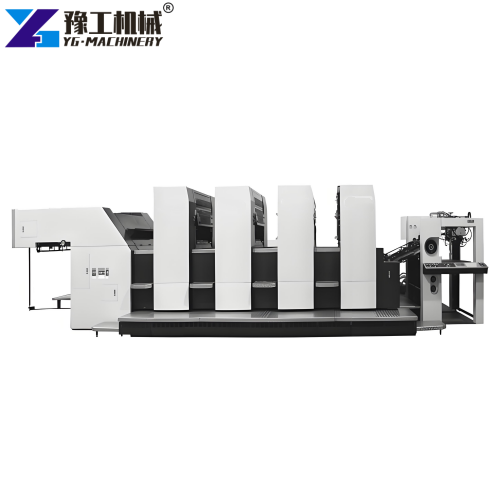
- Recommended Frame: Inline Flexo Printing Machine
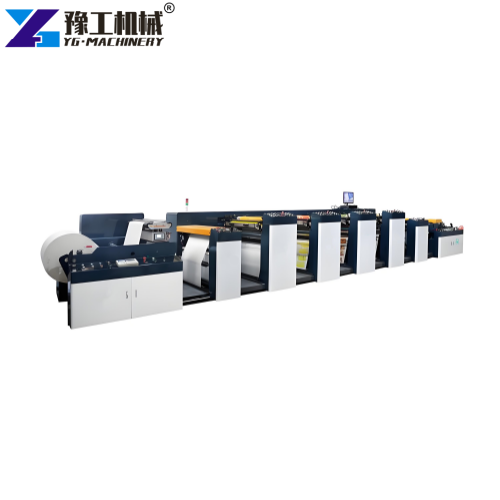
- Why it fits: An inline flexo printing machine features a modular horizontal layout. The space between printing stations accommodates inline converting modules such as UV varnishing, rotary die-cutting, foil stamping, or slitting. Converting raw paper rolls into die-cut finished products in a single pass significantly reduces turnaround times.
Scenario B: Thin PE Film, Shrink Sleeves & High-End Packaging
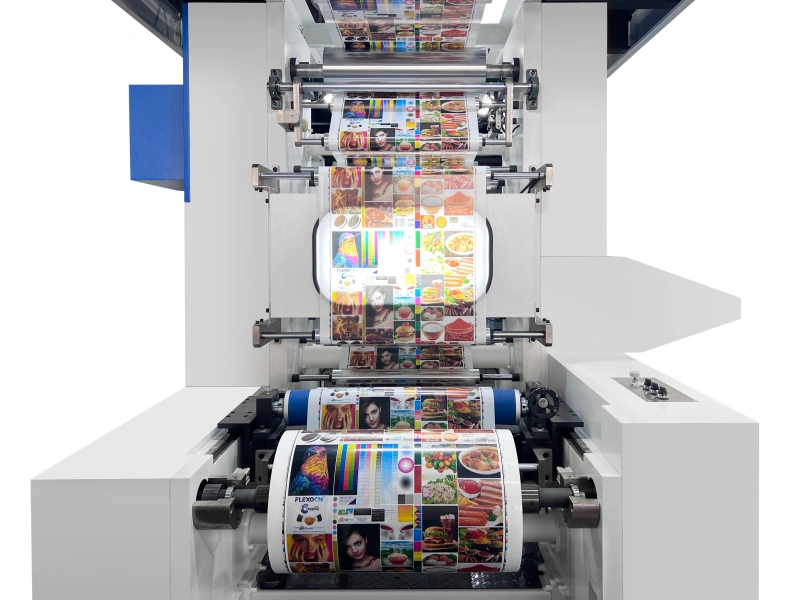
- Recommended Frame: Central Impression (CI Flexo)
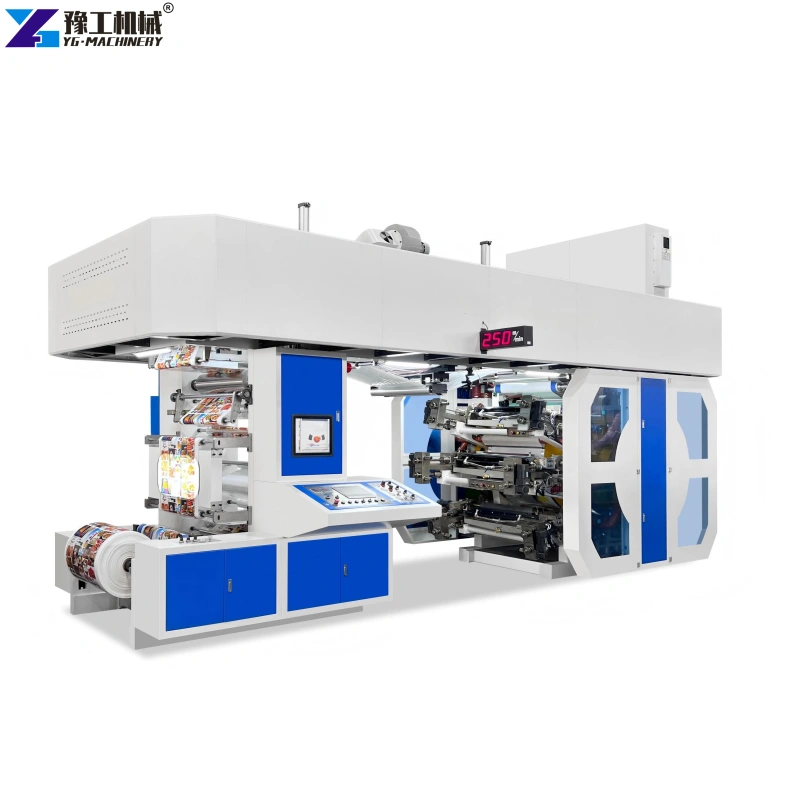
- Why it fits: Plastic films stretch under heat and mechanical web tension. On a ci flexo printing machine, the substrate remains locked against the surface of a temperature-controlled central cylinder throughout the print cycle. This eliminates tension shifts, making it the premier choice for flexible packaging film.
Scenario C: Short-Run Orders & Budget-Conscious Startups
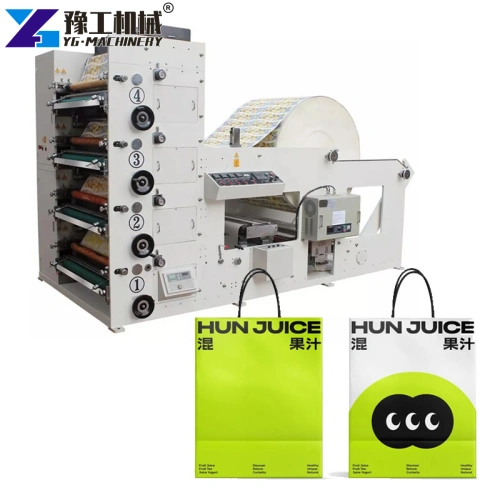
- Recommended Frame: Stack Type Flexo Printing Machine
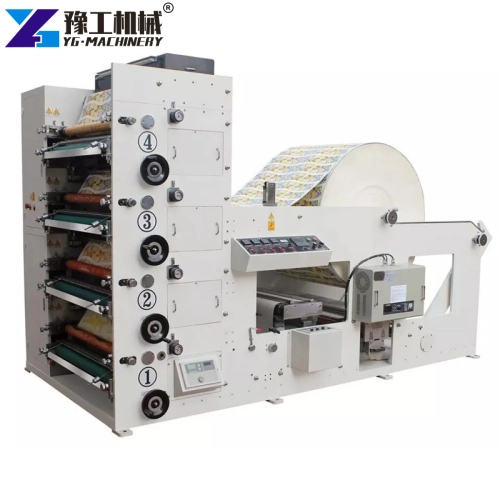
- Why it fits: When factory floor space is limited and orders consist of woven sacks or basic carry bags where registration tolerance around ±0.2mm is acceptable, a stack type flexo printing machine offers low upfront investment, simple operation, and fast maintenance turnarounds.
💡 Selection Tip: When measuring your factory floor, verify crane and ceiling clearance alongside length and width. CI presses require overhead space for central drum maintenance, whereas inline presses require clear longitudinal access for material loading and inline die-cutting units.
Real-World Case Study: Production Upgrades in Mexico
Case: Halting Material Scrap for a Mexican Converter
A Mexican packaging supplier was using an aging stack press to print on 120g Kraft paper. As client demand shifted toward multi-color paper bags with complex graphics, the stack press suffered from web tension fluctuations, driving job setup waste up to 8%.
After evaluating their production focus—primarily 80–180g paper bags without stretchable plastic films—we configured a 6-color inline flexo printing machine equipped with automatic web tension control and high-efficiency air drying:
- Registration Improvement: Color variation dropped from ±0.20mm down within ±0.08mm.
- Waste Reduction: Trial paper waste fell from 8% to below 1.8%.
- Speed & Payback: Line speed increased from 60m/min to 160m/min. The client recovered the price difference within 8 months purely through material and labor savings.
💡 Selection Tip: If your plant handles 90% paper bags and only occasional film jobs, equip your inline press with a corona treater and servo-driven tension control rather than purchasing a more expensive CI machine.
24-hour sales hotline: +8613837112713
Selection & Procurement Q&A
Flexibility is the key advantage of an inline flexo printing machine. If you decide to add inline cold foiling, laminating, or rotary die-cutting later, engineering teams can extend the frame and integrate converting units without replacing the main printing press.
Not necessarily. While CI drums excel on extensible films, thick paperboard creates high bending stiffness around a central drum, which can affect web feeding stability. For mixed-substrate jobs involving heavy paperboard, a servo-driven inline press is often the more practical choice.
An inline flexo printing machine or CI press equipped with sleeve technology allows color changeovers in 2–3 minutes per station. Traditional stack presses using conventional plate cylinders require off-line cylinder swaps, leading to longer downtime between runs.
Related posts:
 Stack Type Flexo Printing Machine Guide: The Cost-Effective Choice for 2026 Packaging
 Flexographic Printing Press Guide: 2026 Industrial Metrics & Workload Adaptability
 Newspaper Printing Press ROI & Cost Analysis: Procurement Guide for Publishers and Printers
 Paper Bag Printing Machine Buying Guide: 2026 ROI & Technical Parameters