In today’s fast-paced packaging market, a high-performance flexographic printing press serves as the core foundation for maintaining mass production efficiency. Traditional lithographic or offset equipment can rarely handle plastic films, aluminum foils, and heavy-weight paper board on a single production line. As an experienced machinery manufacturer, YG Machinery uses modern photopolymer plates and high-line ceramic anilox rollers to change the reality of rough overprinting. Our advanced engineering keeps the overall overprint error strictly restricted to the highest industry standards.
Why Mechanical Structure Design Directly Dictates Flexographic Printing Press Efficiency
The structural configuration of a flexographic printing press determines its production throughput, registration accuracy, and total asset cost.
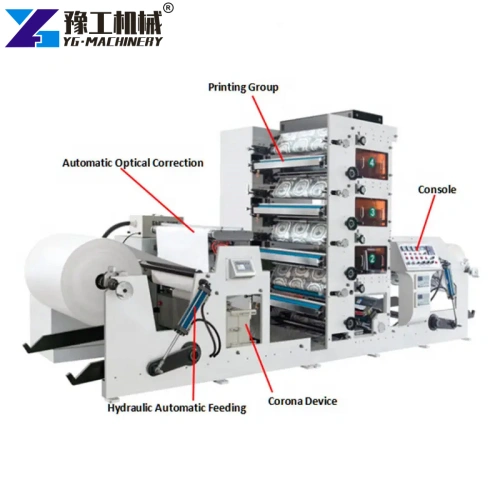
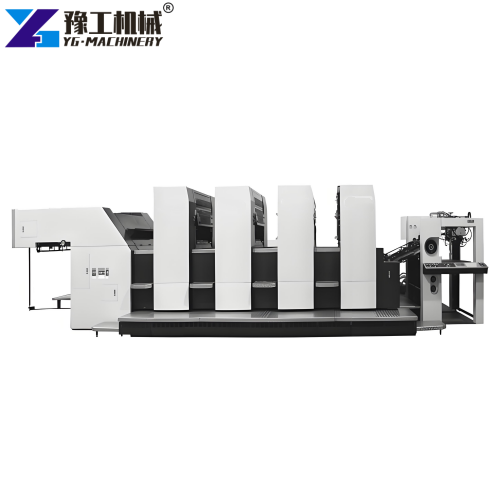
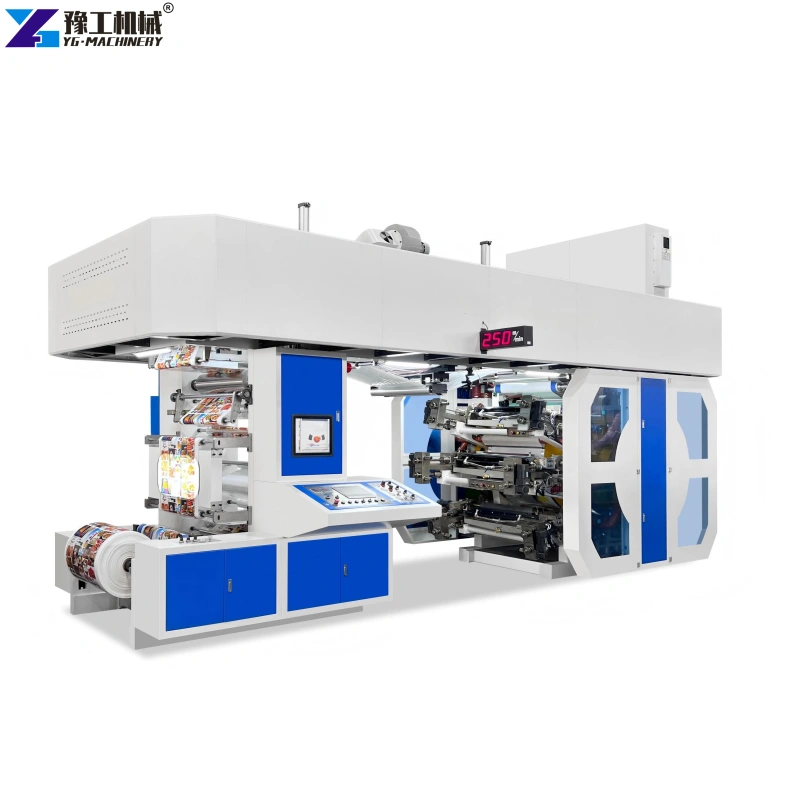
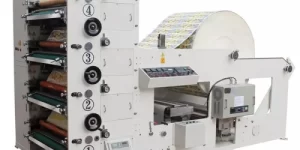
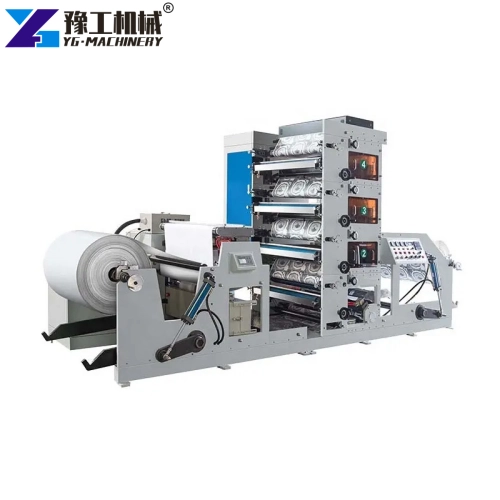
- Classic Stack Type: Printing units are arranged vertically like building blocks. This compact framework minimizes the equipment footprint significantly. Its independent color stations allow easy operation and convenient maintenance with a lower initial machine procurement cost.
- Horizontal Unit-Type: Each printing station is aligned horizontally in a series. This layout offers high structural flexibility, allowing plants to combine color groups with converting options like die-cutting or laminating. It supports double-sided printing in a single pass, making it perfect for short-run jobs.
- Central Impression (CI): All color stations are arranged around a single large central impression cylinder. The substrate wraps tightly around this central drum, completing overprinting sequentially. This design eliminates material stretching, ensuring high registration stability and extreme accuracy.
Technical Tip: When sourcing a traditional letterpress or flexo variant, choose a CI layout if your primary workloads involve thin plastic films or fragile aluminum foils. For tight factory spaces and tight budgets, the classic stack type represents the most cost-effective entry option.
Core Technical Metrics & Model Selection Matrix
On-site maintenance engineers and technical procurement managers need clear, quantitative parameters to evaluate assets effectively.
| Technical Metrics | CI flexo printing machine | Horizontal Unit-Type Press | Stack-type flexo printing machine |
| Registration Accuracy | ±0.05mm (Ultra-High) | ±0.15mm (Medium Accuracy) | ±0.25mm (Standard) |
| Normal Production Speed | 200 – 400m/min(High Speed) | 100 – 300m/min(Medium) | 40 – 80m/min(Low Speed) |
| Substrate Tension State | Drum-locked, zero stretching | Horizontal path, stable tension | Multiple turns, standard control |
| Substrate Adaptability | Elastic films, foils, top-tier foil | Specialized labels, boards, cardstock | Paper sheets, rigid packaging stock |
| Required Factory Space | Complex layout, medium footprint | Long horizontal series footprint | Vertically aligned, smallest footprint |
Real-world workload data confirms that while initial equipment prices vary, analyzing your specific order profiles and substrate compatibility remains the only way to safeguard your long-term capital investment.
Multi-Industry Workloads and Technical Adaptability Requirements
Different substrates place strict demands on a flexographic printing press regarding winding tension, ink thickness, and drying chamber temperatures.
- Liquid Food Packaging & Premium Self-Adhesive Labels: These applications are typical short-run orders requiring rapid cleanups and fast job changes. Unit-type presses excel here by delivering sharp text and thick, tactile ink layers that adapt perfectly to diverse label runs.
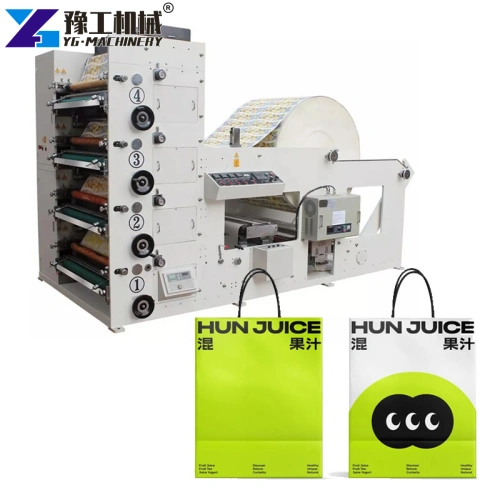
- Eco-Friendly Paper Cups, Bags, & Heavy Shipping Cartons: When configured as a dedicated paper bag printing machine, the press routinely processes heavy stock ranging from 60 – 350㎡ or non-woven fabrics. Because these materials resist stretching, utilizing stack-type or unit-type systems running water-based or UV inks satisfies environmental regulations while keeping production fast.
- Deformable Ultra-Thin Films (PE, PET, Aluminum Foil): These jobs demand a high-speed, high-precision central impression setup to eliminate overprint errors. Because the distance between color stations is extremely short, you must pair the line with high-line ceramic anilox rollers and fast-drying inks to prevent scratching or smudging during high-speed runs.
Technical Tip: When running heavy paper stock on a paper bag printing machine, equip the unwinding station with an automatic hydraulic edge position control (EPC) system and increase web tension slightly to avoid tracking drift.
Success Case: High-Efficiency Line Retrofit for a South African Packaging Plant
In South African packaging circles, a plant manager named Mr. Thabo struggled for months with poor floor throughput. His shop focused on supermarket carrier bags and takeaway food sacks. He relied on legacy letterpress machinery that demanded extensive manual intervention and slow job washdowns. This setup restricted his running speed to just $30\text{ m/min}$ and caused a 9.5% material waste rate due to bad registration. To capture contracts from major local retail chains, Mr. Thabo needed to start a change.
Our technical engineering team assessed his floor plan and built a custom 4-color upgraded bridge-type flexographic printing press. We reinforced the mechanical drive rigidity and engineered an open-access web path to accommodate inline bag-making machinery. Following setup, Mr. Thabo’s running speeds settled comfortably at 120m/min. Because the mechanical architecture remains simple, his crew operates the line with low maintenance overhead. Today, the plant’s waste rate stays below 1.8%, while overall output has tripled.
24-hour sales hotline: +8613837112713
High-Frequency Technical, Operational, and Maintenance Q&A
Modern flexo presses utilize resilient photopolymer plates instead of rigid metal or lead plates. These work alongside flexible, lightweight anilox rollers to perform a delicate “kiss-touch” direct impression. This approach avoids the high-pressure stamping action of old letterpresses, maintaining sharp text clarity without piercing or marking the paper backing.
For broad solid backgrounds or solid zones requiring a thick, tactile ink layer, choose lower line counts (150 – 300LPI) to ensure maximum ink volume delivery. If your job features fine halftone gradients, sharp micro-text, or barcode elements, you must specify high-line rollers (600 – 1000LPI) to manage ink consumption precisely.
It is the wear and bearing lubrication of the guide rollers at points where the substrate changes direction multiple times. If a guide roller fails to turn smoothly, it introduces instant localized tension spikes. This flaw stretches thin materials and causes your registration accuracy to drop immediately. Maintenance crews should inspect these bearings every two weeks.