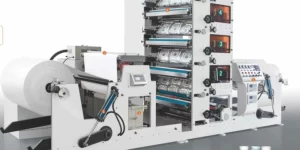
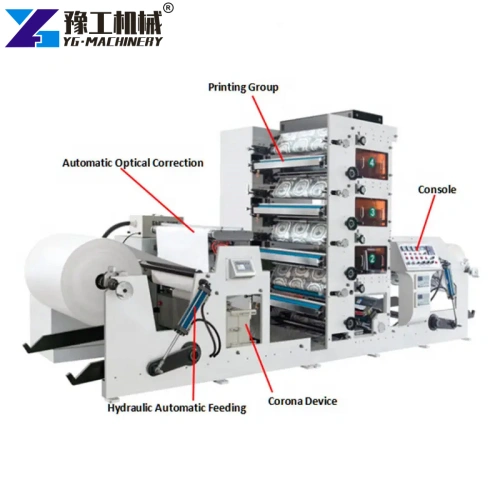
In today’s market, the stack type flexo printing machine is the top choice for small to medium packaging plants due to its small footprint and high cost-effectiveness. This equipment uses a vertical unit stack structure, making it perfect for printing paper, non-woven fabrics, and simple packaging materials. If you need to change your current production capacity, YG Machinery’s stack-type solutions can help you start your business with lower procurement costs.
Stack Type Flexo Printing Machine Printer
| Model | YG -YS850 Flexo Printing Machine |
| Printing Speed | 60m/min |
| Printing Colour | 4 Colours |
| Max.Web Width | 860mm |
| Max.Printing Width | 1400mm |
| Max.Printing Diameter | 1400mm |
| Printing Girth | 175-580mm |
| Precison of Chromatography | ±0.15mm |
| Dimensions(LXWXH) | 4000X1900X2700mm |
| Machine Weight | About 6000kg |
What is a Stack Type Flexo Printing Machine?
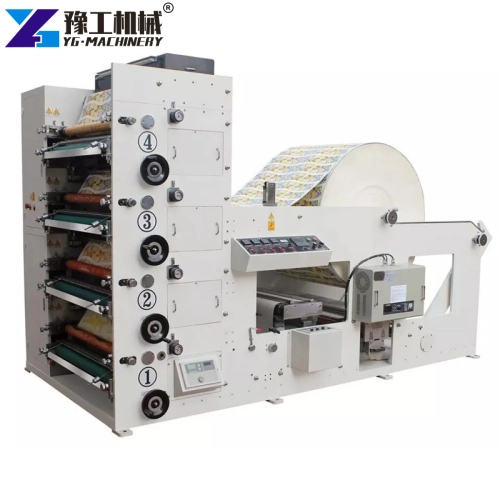
The name stack type flexo printing machine comes from its structure, where printing units are stacked vertically like building blocks. Materials pass through these vertically arranged units to complete multi-color printing.
- Printing Speed: Classic models usually run at 40-80 m/min, while upgraded bridge types can reach 150 m/min.
- Key Strengths: It is compact, easy to operate and maintain, and supports double-sided printing.
- Limitations: Because materials turn multiple times, registration accuracy is usually around ±0.2mm, which is not ideal for stretchable films.
Pro Tip: If your floor space is very limited, the stack type is the only way to achieve multi-color printing in a tight area.
Stack Type vs. CI Flexo vs. Unit-Type
When choosing a flexographic printing press, you must be clear about your production goals.
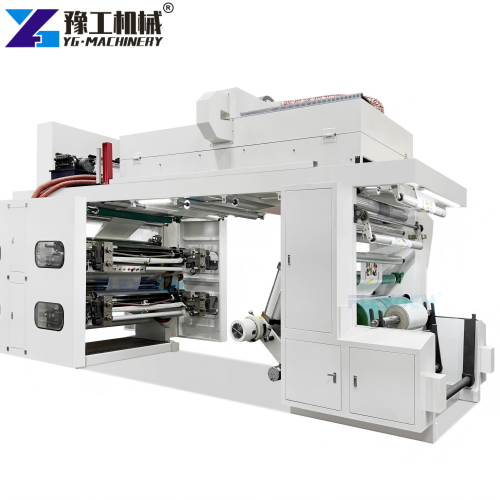
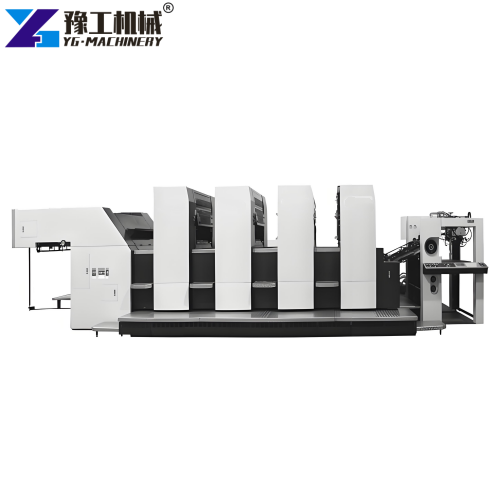
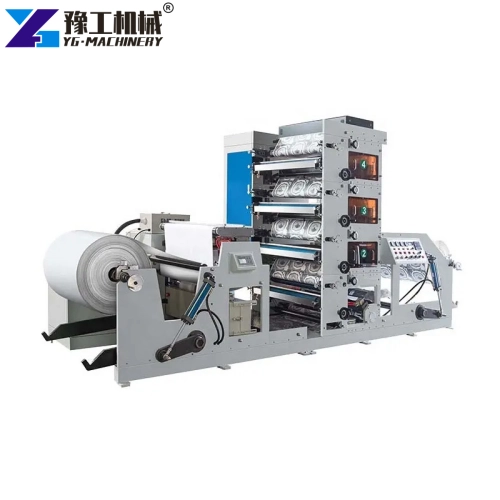
- CI flexo printing machine: Uses a central impression cylinder, offering registration accuracy up to ±0.05mm. It is the only answer for ultra-thin films but carries a high cost.
- Unit-type flexo press: Arranged horizontally with high flexibility, it is great for in-line die-cutting or laminating, often used for high-end labels.
- Stack Type: This is the most economical of the three. If you focus on paper bags or the paper cup printing machine market, it offers the fastest ROI.
Why Choose a Stack Type Flexo Machine for Paper Cups?
As a reliable paper cup printing machine, the stack type flexo press performs steadily with thick paper. It ensures the ink layer is thick and has a 3D-like texture.
- Low Waste: Compared to unit-type machines, its web path is shorter, leading to less material waste during setup.
- Eco-Friendly: It works well with water-based inks, meeting modern green packaging standards.
- Versatility: This flexographic printing press can easily handle paper substrates ranging from 60g to 350g.
24-hour sales hotline: +8613837112713
Stack Type Flexo Applications Across Industries
- FMCG: Mass printing for fast-food boxes and beverage cups.
- Medical Packaging: Printing Tyvek or non-woven medical supply bags.
- Retail: This equipment is a reality for producing branded carry-alls and shopping bags.
Success Story: Paper Bag Line Upgrade in Mexico
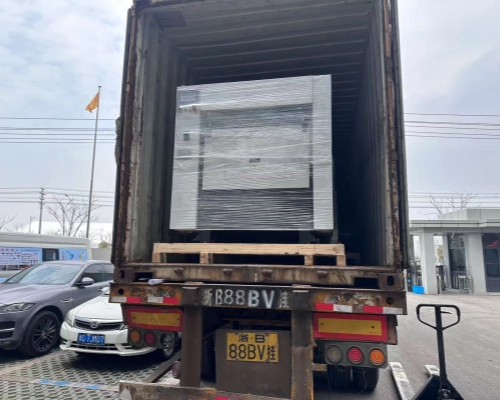
In Mexico, a customer named Alejandro ran a small bakery packaging plant. He initially thought about buying an expensive digital color printer for short-run orders but gave up due to the high ink costs.
We recommended a 4-color stack type flexo printing machine. The machine takes up less than 10 square meters, and the total investment was only one-third of the digital option. Mr. Alejandro reported that after three months, his efficiency increased by 200%, and his orders grew by 40% because he could now offer custom LOGO printing.
Stack Type Flexo Printing Machine FAQ
It can print on rigid films (like PET/BOPP). For stretchable PE film, we suggest a ci flexo printing machine to ensure accurate registration.
A digital printer needs no plates and is good for tiny personalized jobs. A stack type flexo machine needs plates but offers a massive cost advantage in medium to large production.
Upgraded bridge-type stack machines offer more stable tension control to effectively reduce errors.