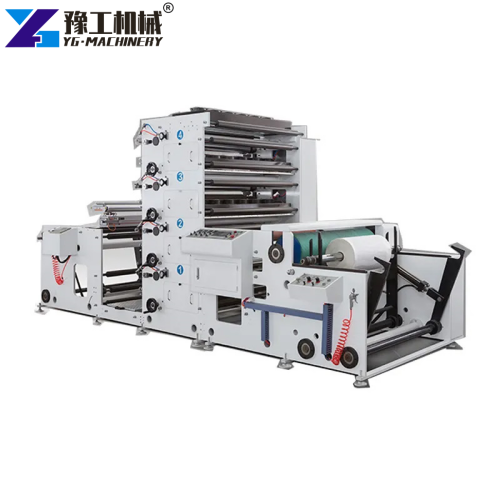
In today’s market, a professional paper bag printing machine costs between $12,000 and $80,000. This price range depends on the automation level, the number of color stations, and the web width. As a dedicated manufacturer, YG Machinery suggests that small to medium packaging plants prioritize substrate weight limits and material compatibility first. This strategy allows you to change your production output directly without middleman fees.
Why Does Technical Model Selection Dictate Your Return on Investment?
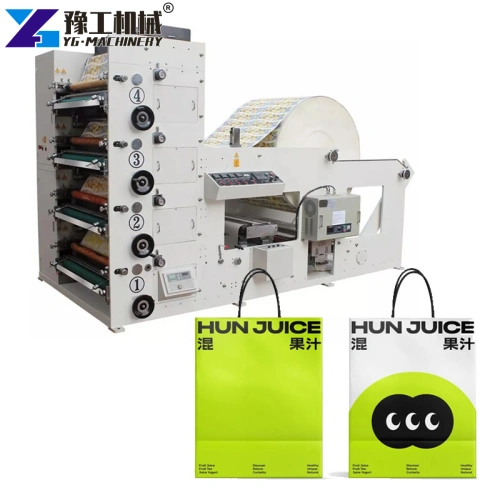
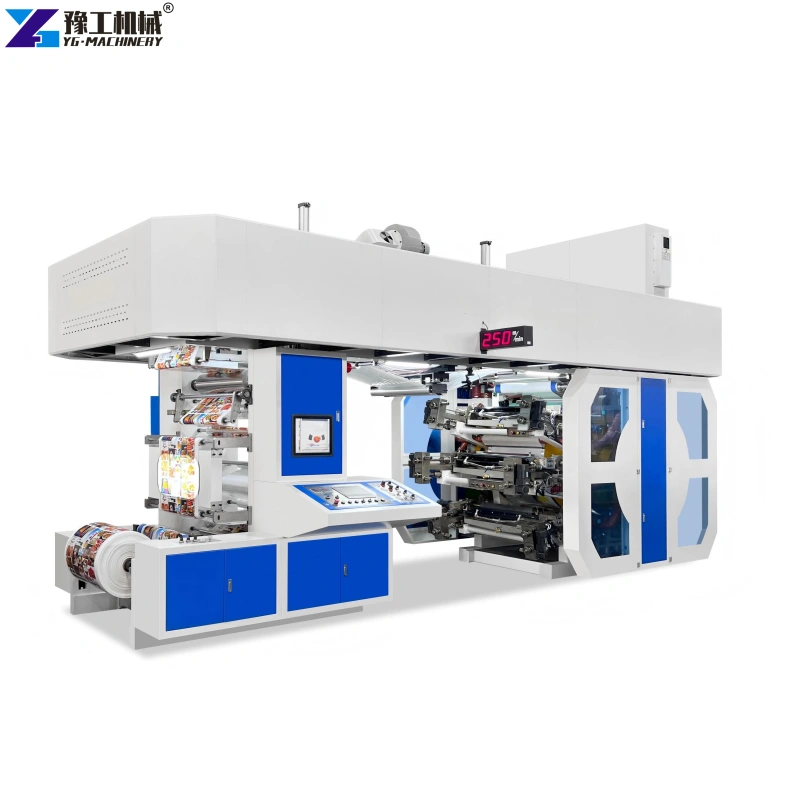
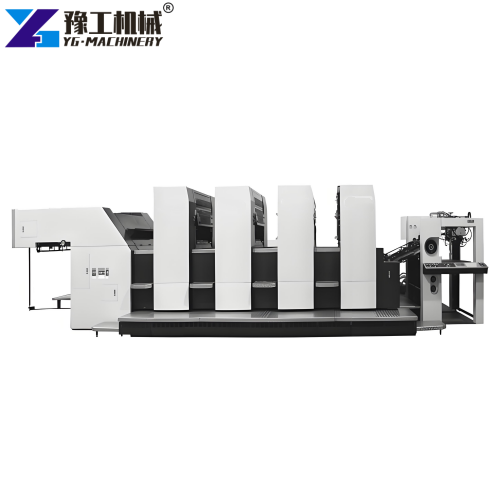
Three primary machinery options exist for packaging bag production, each with a distinct output speed and initial equipment cost.
- Classic Stack Type Flexo Press: This setup features vertically arranged color stations like building blocks. It remains the most popular paper bag printing machine for small shops because it is compact, requires less floor space, and saves initial capital.
- Central Impression Flexo Press: This setup is widely known as a CI flexo printing machine. All color stations surround one central drum, achieving ultra-high registration accuracy, though the machine price is often tripled.
- Legacy Letterpress Machinery: The traditional letterpress printing machine relies on rigid plates to stamp substrates directly. Today, it mostly serves niche runs like retro invoices or textured security prints.
Pro Tip: If you focus on kraft paper take-out bags for local apparel stores, a standard 4-color stack flexo press offers the fastest path to positive ROI. Do not overspend on a CI unit early on.
Why Are Digital Presses Changing the Short-Run Paper Bag Market?
In today’s market, the plateless digital printing press brings high flexibility to small-batch custom packaging. It directly converts digital files into physical prints, skipping the heavy setup and washdown times of traditional flexo lines.
- Zero Plate Costs: Every print can carry different barcodes or variable graphics, perfectly meeting the demand for extreme commercial personalization.
- Consumable Cost Tradeoff: While you save on initial plate setups, the long-term ink and printhead upkeep costs for industrial digital setups remain high.
- The Break-Even Point: When analyzing the digital printing machine price, if your regular orders stay under 500 bags, digital is the right answer. For runs over 2,000 bags, traditional flexo delivers a far better cost per bag.
Industrial Use Cases for Paper Bag Printing Equipment
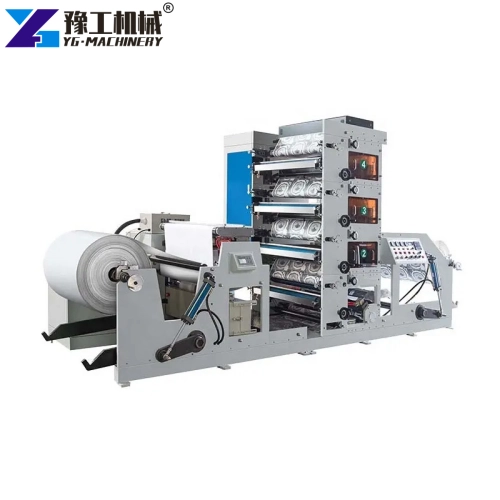
Different market sectors demand specific anilox line counts and distinct ink types from a paper bag printing machine.
- Food Service & Takeaway Sacks: This work uses thin kraft paper (60 – 120g/㎡). This application requires eco-friendly water-based inks and running speeds over 80 meters per minute to satisfy fast-food volume requirements.
- Luxury Apparel & Retail Carrier Bags: This work involves heavy cardstock (180 – 300g/㎡). This workload needs robust rewinding tension control and often runs inline with converting options like laminating or die-cutting.
- Industrial Valve Bags for Flour or Chemicals: These heavy multi-wall bags demand high durability and tear resistance. Operators must use high-line ceramic anilox rollers to ensure text and barcodes stay perfectly sharp.
Pro Tip: When running thin kraft paper stock, do not set the suction fan volume too high. Excessive air volume wrinkles the paper, throwing off your color registration.
Success Story: How a Dominican Plant Reduced Material Waste by 15%
In the Dominican Republic, a factory supervisor named Mr. Mateo faced constant headaches due to legacy equipment. He operated an outdated letterpress printing machine to produce bakery sacks. The line required endless manual intervention, taking two hours for job cleanups. Worse, the high overprint error wasted roughly 11% of his raw material during setup. Mr. Mateo knew it was time to start a change.
To solve his problem, we engineered a custom 4-color upgraded bridge-type paper bag printing machine. We equipped his line with an automatic tension control system and chambered doctor blades. After installation, Mr. Mateo’s running speeds settled comfortably at 100m/min. Because the web tension remains completely stable, his registration error dropped under ±0.15mm, cutting setup waste below 1.5%. Over the past six months, this asset has saved large sums on paper stock. Plus, adding custom double-sided printing options increased his plant’s profit margins by 35%.
24-hour sales hotline: +8613837112713
Frequently Asked Questions Regarding Paper Bag Printing Machinery
It can handle some rigid films. However, elastic PE film stretches easily on standard stack machines, creating ghosting issues. For elastic films, a CI flexo printing machine is the right answer.
In today’s market, 90% of standard mass-produced bags utilize water-based inks because they cost less and protect the environment. If your business focuses on quick commercial graphics, personalized gifts, or urgent short-run top-offs, a digital printing press is the right path.
Wipe the rollers down immediately after shutting down using a dedicated, non-corrosive solution. If ink dries inside the cells, it blocks proper ink transfer during your next production run.